Email email Print print

Review of GreenPort Congress - bridging communities

03 Jan 2012
Dimitrios Theologitis

Dimitrios Theologitis

PORTS ARE NOT ISLANDS. As European Commission Vice-President Siim Kallas said recently “Ports are engines of economic development and sources of prosperity for our cities, regions and nations”.

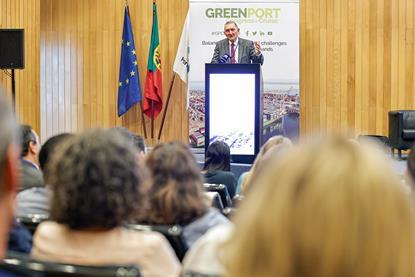
To be sustainable, a green port must bridge between its many stakeholders in business and social communities and support knowledge sharing and cooperative innovation. This was a key theme running through the 6th Green Port Congress in Hamburg (14 and 15 September 2011) bringing together 200 delegates from nearly 30 countries.

Green Port? No longer a choice!

Being a green port is no longer a choice. Ports have a key contribution to make in the sustainability of the logistics chain and their communities. This was the message from the opening speakers.

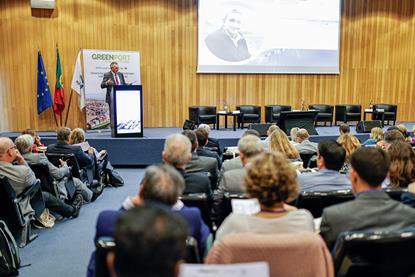
Dimitrios Theologitis, Head of Unit ‘Ports and Inland Navigation' at the European Commission (EC) stressed the vital role ports must play as entry nodes into a European green transport system capable of delivering the EC reduction target of 60% for transport related CO2 by 2050. Enhancing ports status within the TEN-T networks and eliminating ‘red tape’ across modes are important enablers.

Frank Horch, Hamburg's Senator for Economics, Traffic and Innovation observed that whilst shipping’s CO2 emissions compare favourably with other modes, the sulphur dioxide and nitrous dioxide emissions continue to be problematic. Ports can have a positive influence on this through investing to enable LNG bunkering and onshore power supply (OPS) and introducing incentives such as the Environmental Shipping Index (ESI).

Jens Meier, Chairman of the Hamburg Port Authority (HPA) Management Board agreed. Sustainability is a key criterion for competitiveness and requires investment. For example, HPA have installed a port road management system, are removing bottlenecks between road and rail traffic to improve traffic flows and they have also deployed innovative geo-thermally heated railway points to help avoid cold weather disruption.

ESPO Chairman Victor Schoenmakers stressed the importance of providing a platform for ports to learn from each other and adapt best practice to their environment. The new ESPO Green Guide and PPRISM projects (more later) are important enablers.

The opening speakers agreed that whilst the congress had successes to celebrate, the road ahead was still long. The event should inspire further progress through shared learning.

Co-operative innovation through the business community

The logistics and port sectors face many challenges impacting the Green Port, and requiring co-operative innovation. ESPO Secretary General Patrick Verhoeven introduced some examples.

Emissions reduction and efficiency

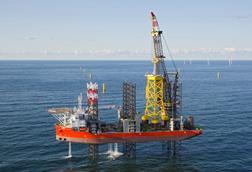
The stark challenge of reducing shipping emissions to meet the EU’s CO2 reduction target of 40% by 2050 was presented by Pierre Sames (Germanischer Lloyd). He suggested 27% could be achievable through a mix of measures including LNG fuel conversion. Visionary breakthroughs such as ‘topping up’ at offshore wind installations may be the future!

Terminal operators (TOs) contribute only 2% of container supply chain emissions. Cost and supplier pressure, however, require action and Stef Capelle presented the EEEG’s progress towards a shared approach to CO2 footprinting and reduction. Each terminal is unique making direct footprint comparison unrealistic, but year on year improvement may be!

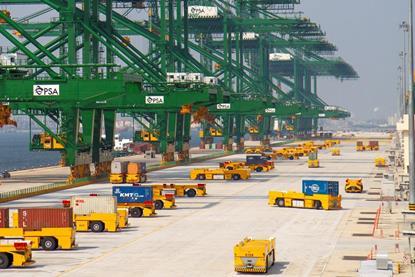
HHLA see terminal electrification powered by renewables as key to reducing emissions as volumes continue to grow. Jan Hendrik Pietsch presented a number of innovations including their zero emission automated guided vehicles (AGV’s) and food waste conversion into electricity on site.

The art of PATCH work Innovation is a key feature of EU project PATCH – Ports Adapting to Change. The aim of the project is to provide a test bed for ports and their stakeholders to develop practical solutions to meet changing circumstances, explained Howard Holt (Seeports), and importantly to exchange learning at an early stage. PATCH work includes a new low carbon ferry terminal in Portsmouth utilising sea water and natural ventilation, development of offshore wind support facilities and utilising industries residual resources via a Multi-User- Provider pipeline at Zeeland Seaports.

Industrial ecology thinking

Connecting different businesses and exchanging resources is central to industrial ecology thinking. Developing circular resource flows to minimise waste is becoming embedded in Dutch port areas. ‘Cooperating with neighbours ’ and facilitating an area wide community of interest can be of benefit to small and large ports. Kate Royston, Robbee Smole, presented examples including an ongoing project across the Bristol Port area.

Patrick Verhoeven concluded that no player can afford to work in isolation. The presentations highlighted the power of co-operation in developing sustainable, innovative and replicable solutions.

Following lunch, the afternoon focused on a number of ESPO led initiatives.


Shared celebration: PERS certificate awards

Antonis Michail and Victor Schoenmakers (ESPO) congratulated the Ports of Cork and Peterhead with their PERS (Ports Environmental Review System) certification renewal. EcoPorts continues to flourish and ports are encouraged to get on the map (http://www.ecoports.com/signup).

Show me! The power of PPRISM

Dr. Chris Wooldridge (Cardiff University) updated delegates on PPRISM progress. The European Commission, ESPO, academic partners and ports community are working to identify a set of indicators for use as a Port Performance Dashboard. This should provide a powerful tool to evidence ports environmental health. See http://pprism.espo.be/ Home.aspx for more information.

The Green Guide – Updating the environmental code of practice

Antonis Michail and the drafting team presented their progress in developing the Green Guide and requested feedback. Initial focus centres on management of air quality, energy and climate change, noise, waste and water. The challenges faced in managing each area are outlined and potential response options and actions- the 5 E’s (see box) suggested based on best practice experience.

The Green Guide ‘5E’s’

Exemplify – setting positive examples to other port users e.g. a fuel efficient fleet and energy efficient port buildings.

Enable – providing infrastructure to support improved environmental performance e.g. Onshore Power Supply, provision for LNG bunkering, ongoing noise monitoring.

Encourage – incentivising port users to stimulate better environmental performance e.g. differential port dues for reduced emissions, grant facilities to fund improvements.

Engage – sharing knowledge and skills e.g. communicating successes such as cost reduction achieved through waste segregation, establishing a port action group with neighbours and stakeholders.

Enforce – regulating behaviour of port users and ensuring compliance e.g. establishing low emission zones for air quality and noise, incorporating conditions in lease and concession agreements setting levels of emissions, noise, water usage etc.

Panel’s verdict on the Green Guide!

Patrick Hicks, Director of Oakhill Media Ltd, invited Wolfgang Becker (HPA), Greta Marini (AIVP) and Dr. Christian Bussau (Greenpeace) to give their reaction to the Green Guide. There was consensus that this was well structured and Wolfgang Becker commended its value as a stakeholder communication tool.

Greta Marini suggested that developing beneficial port-city relationships should be addressed including developing a shared vision and exploring mutual opportunities and the potential for industrial ecology. Christian Bussau welcomed the chance for NGO input and stressed this should just be the start of a continual improvement process. Gun Rudeberg (Port of Stockholm, drafting committee chairperson) agreed. The committee would consider these points before final completion.

The Green Guide should be available mid 2012 supported by on-line tools.

Patrick Verhoeven kicked off a packed ‘day two’ agenda looking at community initiatives. Working with nature and climate challenge was followed by parallel sessions addressing innovation.


Integrating with the community

ESPO Societal Award

The ESPO Societal Award was launched in 2009 to bring greater focus to developing community relations between the port and its city. Patrick Verhoeven introduced the entries to the 2011 award: ‘Creative strategies to communicate the port to the wider public’. Seventeen entries were shortlisted to three (Port of Koper, Ports of Stockholm, Thessaloniki Port Authority) who all focussed on long term communication strategies. The winner was announced in Brussels on the 9th November (http://www.espo.be) – see page 28.

How can Port Centres make a difference to community relations?

AIVP’s Greta Marini introduced the concept of Port Centres and showcased Rotterdam, Antwerp and Genoa. Permanently staffed and located within the port, to be successful Port Centres should focus on port activities and their economic role, and deliver a good balance between education, entertainment and communication. AIVP will be sharing these success factors with members across the newly formed Port Centre Network (http://www.aivp.org).

Adaptation essential - no port untouched by climate change

This was the message as Isabelle Ryckbost (EFIP) kicked off the discussion on climate change adaptation.

UK ports may be at the frontline in considering this issue. The ground breaking UK Climate Change Act requires ports (handing in excess of 10mtpa) to annually report on their carbon footprint, mitigation measures and adaptations. Dr. Matthew Hunt (Royal Haskoning) stressed that while potential risks in the UK may not be as extreme as elsewhere, each area of the ‘ports infrastructure and operations’ should be assessed.

HPA’s Maja Fickert agreed sharing HPA’s work-inprogress, assessing ‘impacts on port development’, particularly planning, construction and maintenance sensitivities. Areas of concern include maritime access and dredging.

Both speakers highlighted ‘vulnerabilities of hinterland transport links’. If a failure e.g. flooding impacts the chain can the port absorb the congestion build up? As evacuation routes in case of flooding, road systems may need to be prioritised and bridges and their clearance may be weak spots as sea levels rise.

Delegates questioned the ‘degree of certainty’ of impacts. It was concluded that direction of change is certain. Flexibility and risk management must be built in to operations and incorporated into the EMS.

Port development - Working with Nature

Francois Kremer, Policy Co-ordinator at the European Commission, DG Environment for Nature Conservation, opened the session and stressed the need for good and early stakeholder communication with joint fact finding in project development, building trust. Maasvlaakte II and the Port of Antwerp’s expansion were cited as good examples but suboptimal. Project design must ‘work with nature’, beginning with the perspective of ‘natural systems rather than technical design’ if there is to be a chance to achieve the EU target to halt biodiversity and ecosystem services losses by 2020.

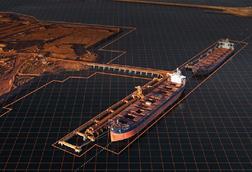
Bob Brunner (North Queensland Bulk Ports) explained how the expansion at Hay Point (one of the ‘world’s largest coal ports’, doubling in size) has built nature in from the start. A ‘land use plan identifying environmental needs’ led the process with the site master plan developed on the remaining land.

Christine Dobraniak shared Dunkirk’s experiences in prioritising nature. Flora, fauna and habitat from their 3000ha development area is inventoried, and ‘biodiversity hubs with corridors’ linking the area identified, together with a budget for long term management. The remaining 1700 ha will be developed.

In the ‘South Humber Gateway’ (a regeneration area and one of Europe’s major estuaries for bird breeding and over wintering) Peter Barham is facilitating an innovative process to create investor confidence by pre-determining or ‘banking mitigation zones ahead of development’, safeguarding the birds welfare.

Nature is challenging the ‘maintenance of navigation in the Elbe’ as climate change and man made interventions have increased tidal flow and reduced flushing causing increased sedimentation. HPA and its partners in EU project TIDE are working with stakeholders to better understand how to manage these challenges now, and in the future.

The greening of ports and the logistics chain

An important starting point may be ‘Carbon Management’. James Peet (Greenstone) shared the benefits of a ‘fit for purpose’ carbon management tool and highlighted some of the issues, particularly in setting ‘footprinting’ boundaries.

Further insights into improving ports energy consumption and performance are expected from ‘Green EFFORTS’ (EFFective Operations in poRTS). Introduced by Prof. Jens Froese (Jacobs University, Bremen) this EU 7th Framework project builds on successful EFFORTS (http://www.efforts-project.org/) The ‘E-harbours’ project is enabling several innovative demonstration projects being developed in Antwerp, Hamburg, Malmo, Amsterdam, Scalloway Harbour and Udevalla including district heating, electric vehicles and harnessing power from local businesses. Introduced by Hans Schafers, the project addresses opportunities arising from deployment of ‘innovative intelligent energy networks’ (http://eharbours.eu/).

Innovative logistics concepts

As port cargo volumes grow, hinterland transport comes under increasing pressure. Paul Bokdam (Lloyd’s Register) explained the innovative Dutch Circle Lines concept approach developed to eliminate unused capacity, bringing together competitors. Lloyd’s Register and ECOSLC have developed a complementary management system enabling quality, cost effective and secure chains, ready to be piloted.

Dr. Padideh Moini Guetzkow (Siemens Mobility Consulting) highlighted ‘key levers for green logistics concepts’: transport avoidance, shifts in transport modes and freight consolidation through hubs and packing optimisation. Exciting innovations include automated cargo movers and rail cargo concepts such as CaRL that don’t need marshalling yards.

Virtual Arrival

Virtual arrival can be significant in reducing maritime emissions. Captain Garry Hallet (OCIMF) provided insight into the system that enables a ships master to receive daily information facilitating his arrival in port when the berth is ready, adjusting speed accordingly. Integrating passage weather conditions from a Weather Analysis Service Provider is an important element.

In summary

Howard Holt (Seeports), session chair, emphasised the importance of co-operative innovation featured in the initiatives and looked forward to hearing how they progress.

Technical innovations

Richard Marks (Royal Haskoning) introduced innovative solutions of interest to Congress.

Rob Witte (DGMR) presented ‘noise planning and management’, key to overcoming noise issues. This has certainly been the Port of Rotterdam’s experience over the last 15 years. The NOMEPORTS Good Practice on Port noise mapping and management provides a good reference (http://nomeports.ecoports.com/).

‘Oil spill response’ is another important consideration. John S. Brinkman(Imbibitive Technologies) described their innovative imbiber beads, of super absorbent oil sensitive polymer, and related deployment systems which enable oil subsequently to be recovered.

Hamworthy’s Dr Wei Chen highlighted the dilemma posed by increasingly stringent rules for ships ‘black and grey water management’. Out of step with land based regimes they cause excessive carbon emissions. Combining appropriate port reception facilities and grey water management facilities could be the answer.

Ernst Engelmann (Cisco) presented ‘HPAnet’ and explained how streamlining port areas IT systems into a single system could provide significant benefits. HPA’s system has delivered reduced investment costs, annual operating cost savings estimated at 70% and enabled functionality such as the new road traffic management system and improved virtual communications.

A co-ordinated IT service is at the heart of Ship Waste Energy’s ‘system for handling ships waste’. Sylvain Perrier explained that connecting stakeholders on a single platform could deliver improved compliance, traceability and reduced costs.

Lars Meurling (Bromma) concluded the session proposing that ‘a green port requires green equipment’. Not just reduced power consumption but a design also to reduce embodied energy, using less harmful materials and ensuring the highest levels of reliability to minimise down time.

The congress was brought towards its close with a stimulating debate on shipping emissions.


Are the EC running too fast in imposing emissions trading on the European market before the IMO?

This was the question Julian Stares, Editor of Marinewatch, posed to the panellists.

Alfons Guinier (ECSA) stressed that market based mechanisms such as emissions trading could only be successful if applied globally. Distortion would result unless applied to all flags. Pressure is needed on the IMO and EU Member states to ensure a global solution. This was the consensus.

Ann Schroeer (Oceana) pointed out the numerous operational and design measures already available to substantially reduce emissions, including slow steaming, just-in-time arrivals, use of sails, kites and rotors and LNG fuelling. Christian Bussau (Greenpeace) concurred. Why do ship owners continue to wait for a political framework when they could save money by taking action now to improve shipping efficiency he asked? Justin suggested changes were afoot. Maersk’s Triple E fleet is under development, Grimaldi’s new cruise fleet can reduce emissions by 50% and the IMO’s EEDI index would have an impact.

What part could ports play? It was agreed that the ESI was valuable but not game changing. Alfons stressed it must have global take-up with many participants to be useful.

The debate concluded that ‘market mechanisms must be applied globally’ to avoid distortion, but in the end ‘innovative engineering and operations have the greatest potential’. The fleet of 2050 is likely to be very different!

Closing remarks

The Port of Hamburg’s Sabine Stueben warmly thanked all participants for the many fruitful discussions which had taken place over the two days. The Port of Hamburg had learnt a lot and was looking forward to putting the lessons to good use!

Marseilles takes up the baton!

GreenPort Congress 2012 will be hosted by Marseilles Fos Port Authority on the 3rd to 5th October 2012. Sophie Choquelle welcomed participants to come and join her next year as she picked up the baton!

■ GreenPort 2011 presentations are available at: www.greenport.com/congress/downloads  

Hamburg’s Hospitality and Heritage

The Hamburg Port Authority and Hamburg State Government welcomed delegates warmly during this, their year as European Green Capital. A welcome reception was held in the impressive City Hall on 13th September. An opportunity to relax was provided at the Conference Gala Dinner held at the famous Fischauktionshalle on the evening of the 14th September.

By Kate Roston, Robbee Smole Sustainable Business Solutions

Images for this article - click to enlarge

Kate Royston. Robbee Smole Sustainable Business SolutionsDimitrios TheologitisImpression of future container ship coming to re-power at wind farm. Source: Germanischer LloydDenis Healy (Port of Cork) and Richard Baird (Peterhead Port Authority) receiving their PERS Certificated from Victor Schoenmakers. Source: ESPOConsider impacts on bridge clearance heights. Source: HPAAerial view of Port of Hay Point. Source: North Queensland Bulk portsFuture of Hubs - Siemens Mobility Vision. Source: SiemensHPA's Road Traffic Management system in action. Source: HPAHanding over the baton                                                                               Welcome Reception

Unless otherwise stated, all images copyright © Mercator Media 2012. This does not exclude the owner's assertion of copyright over the material.


Business News - Sign Up Today!

Email news News feeds
Magazines Networks